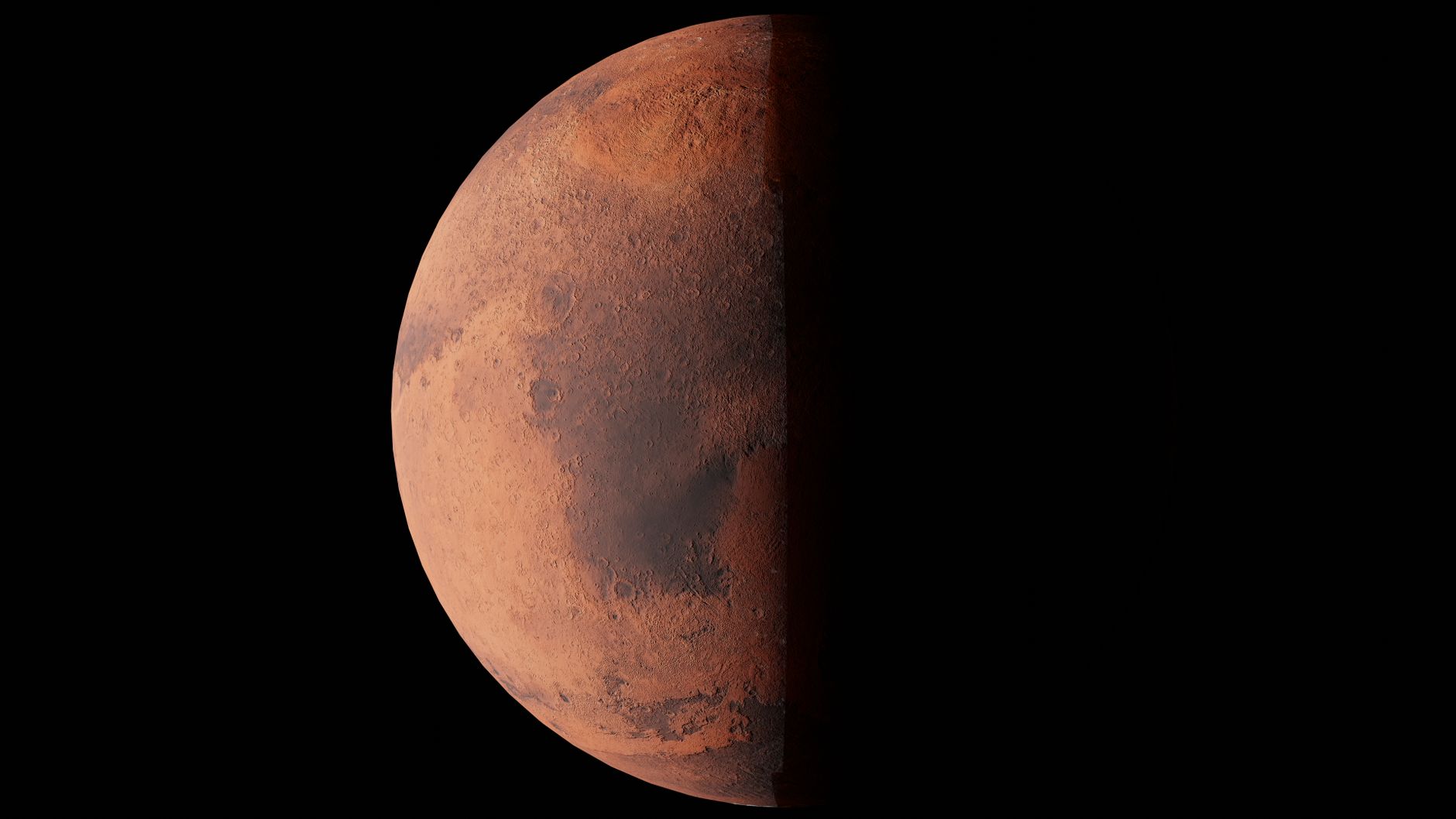
NASA intends to send a working nuclear reactor toward Mars in late 2028. Space Reactor-1 Freedom will split uranium atoms in open space — not to blast the craft along, but to make electricity, Hall-effect thrusters drinking from a fission core thousands of miles from any technician who could turn a wrench on it. The agency calls it a test of a technology to power human missions across the Solar System.
Read that the way I read it, with forty years of plant-floor and twenty of a garden plot in my bones: that reactor exists because solar panels have a failure mode NASA refuses to accept. The further from the sun, the weaker the light and the larger the array; and the larger the array, the more foil there is to puncture, more dust to settle, more mechanism to seize. Near Earth it is fine. At Mars, on a surface where storms can dim the sky for months, you stop asking whether the panel will deliver and start asking what happens the week it doesn't.
Nobody claps for the backup. Until the backup is the only thing standing between you and a season with nothing to show.
That question — what happens the week it doesn't — is the risk register. It is typed up and signed the way I sign the frost-date document every autumn. And the answer to it is never "hope harder." The answer is physical mass: a spare envelope of seed in the tin, a month of safety stock on the line, and in deep space a fistful of uranium nobody wanted to carry.
How the margin gets spoken for
There is a useful prejudice hiding in the word redundancy. It sounds like waste, duplicated effort, the second person doing the same job. I have spent my life un-learning that. On a machine line, redundancy is not a second copy of the same part. It is a second way to meet the same requirement — a different lane with a different risk profile, so that the thing that fails in lane A is not the thing you bet the whole year on.
The garden taught me the same mathematics. I plant to the latest frost date I can remember, then add a week earned the hard way. A neighbor calls it pessimism; I call it having watched a cold snap take June from somebody. The extra week costs me nothing but patience in the spring, and it forgives the forecast that arrives wrong — as forecasts tend to on the dividing line of a Midwestern county.
NASA's number reads the same at planetary scale. A reactor is heavy; plutonium is political; the whole thing is expensive. Somewhere a program manager did the arithmetic the way I do for a spare spindle: the cost of the backup, against the cost of the season without one, and the reactor lost on paper only to enemies with infinite budgets. The margin is not what's left over. The margin is the point.
The alternate lane, walked in good weather
There is a discipline people get wrong even when they practice it: a contingency plan is not a folder of what-ifs. It is a walked route, a printed procedure, a stamped test run while the primary lane still holds. Panic is not a plan. Contingency is worry told exactly where to stand.
| Level | Plant floor | Garden plot | Deep space |
|---|---|---|---|
| Trigger | Supplier misses the window | Frost comes a week early | Dust dims the array |
| Backup | Alternate lane, pre-approved + tested | Spare seed, cold-hardy + started | Reactor, throttled + independent |
| Tested | October, while primary holds | Every dry Saturday | 2028 flight, before crew depends on it |
| Cost of skipping | A month of dead line | A bare autumn table | An unreturnable crew |
The alternate lane is the part people least want to hear about, because proving it works is dull work done in good times. I print the procedure, I walk the route, I sign the test — in October, when nothing is wrong and it feels like waste. That is exactly when it must be done. The week the primary fails is the week there is no time to learn the alternate, only to run it.
The transferrable ledger
What a reactor, a spare spindle, and a seed envelope share is a refusal to treat the forecast as a promise. A forecast is a bet about the future; the redundancy is the money you set aside in case you're wrong. The two are not in tension. They are the same ledger — the second column under the first, held to the same signature.
When I read that NASA has set a date for the reactor, I did not think about rockets. I thought: good — somebody upstream knows that at Mars, hope is not a power source. The distance does the same thing the ocean does, the same thing the calendar does. It strips the margin of its flattery and leaves it exposed as what it always was: the only thing standing between the year and the weather.
— Anna Martin, on reading the reactor date
So I keep the ledger. I keep the spare seed and the alternate lane and, this year, the patience to do the dull October work in good faith. NASA keeps the uranium. Both of us are just answering the same good question: what happens the week it doesn't?
Sources and grounding
Grounded against the Knowledge Graph (Q138789833, CC0): Space Reactor-1 Freedom is a proposed nuclear-powered spacecraft, a prototype operated by NASA, country of origin United States, powered by Hall-effect thrusters with a nuclear reactor as its source of energy, launched to Mars in 2028.
Reported this week: NASA plans to send a working nuclear reactor toward Mars in late 2028 — the first test of technology meant to power human missions across the Solar System.